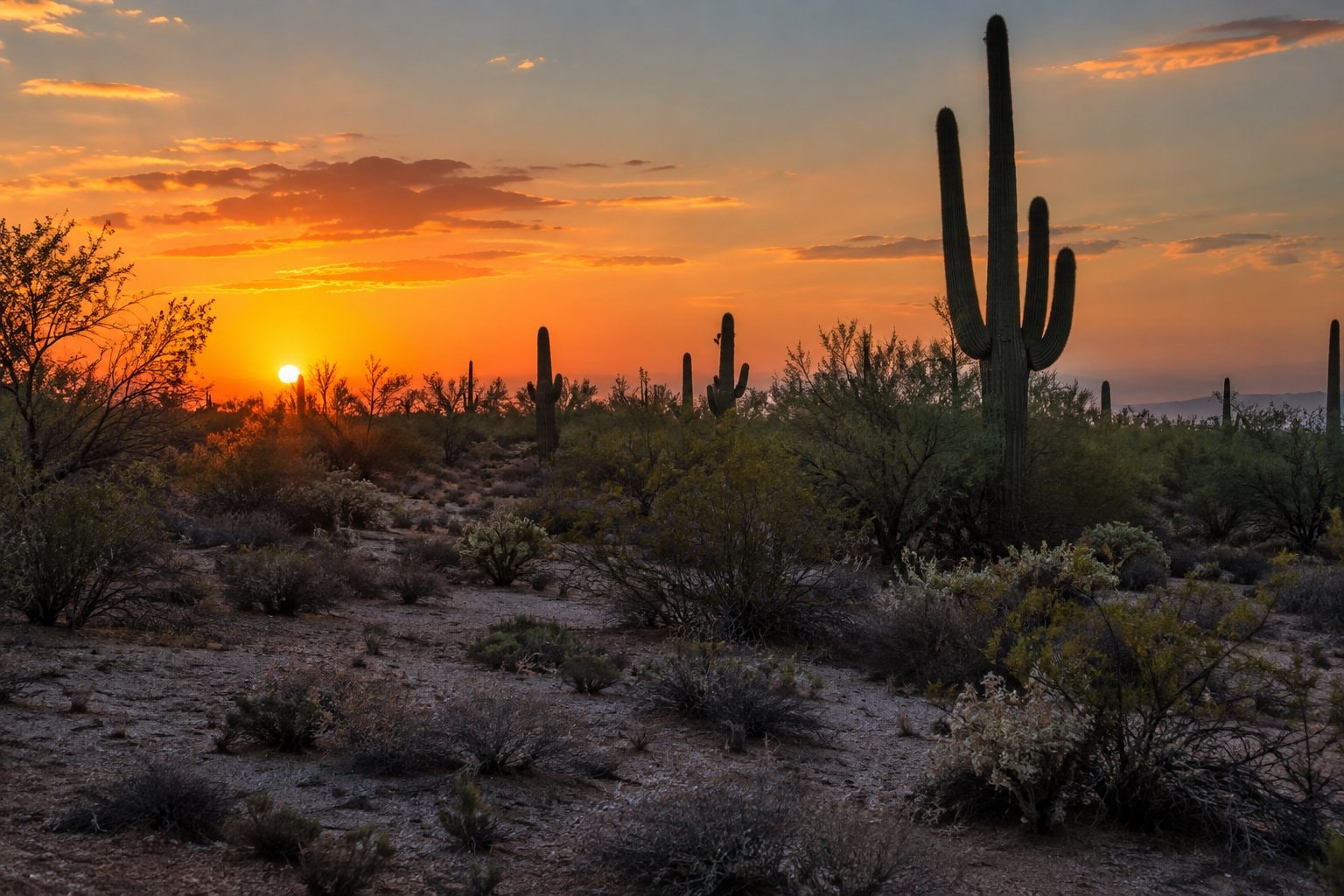
Phoenix is Arizona's capital and lies in the Sonoran Desert. Its arts landscape includes halls for music, rooms for theatre, museums and galleries, with the surrounding metropolitan area adding further performance settings. Describing that landscape means keeping different kinds of institution in view. A concert hall, a museum and a public arts agency have different roles even when their subjects meet.
This page gives a general account of that setting. It is not a calendar or a guide to choosing an event. The institutions named below appear as subjects of the reference reading, without a ranking or an invitation. The account makes no claim about an improvisation company or festival in the city.
Stages and the companies around them
Wikipedia's Phoenix arts-and-culture account includes Phoenix Symphony Hall among the city's performing arts venues. It also describes the Arizona Opera Center as a setting for more intimate opera performances. These examples show how a company's work can appear in settings of different scales without making those settings equivalent.
The same account names the Orpheum Theatre among those venues. It identifies the Herberger Theater Center with resident companies Arizona Theatre Company and Centre Dance Ensemble, and with use by Valley Youth Theatre, iTheatre Collaborative and Actors Theater. The shared presence of companies in a facility is part of the city's performance landscape; it does not make the facility itself a company.
A reader can distinguish the room, the producing group and the kind of performance. A hall provides a physical setting. A company brings an artistic practice and a programme of work into that setting. Their names can appear together in an account of the city, but they answer different questions about what live performance requires.
A metropolitan setting
The reference also includes Gammage Auditorium in Tempe and the Mesa Arts Center among the region's performance spaces. Those place names extend the discussion beyond the boundaries of Phoenix itself. A metropolitan arts landscape is not simply a collection of rooms inside the central city. Nearby communities have their own settings for live work.
This geographic spread matters to how the landscape is described. A regional account can include institutions outside the city without suggesting that they occupy the same neighbourhood or serve the same function. The purpose here is to identify that wider setting, rather than plan a route through it.
The transport section of the Phoenix reference describes light rail and bus service across the metropolitan area. That supplies context for the relationship between different parts of the region. It is not a timetable, journey instruction or assurance that a particular arts institution lies beside a station. The arts account and the transport account concern the same region at different scales.
Museums and galleries beside live performance
The Phoenix reference names the Phoenix Art Museum, the Heard Museum and the Musical Instrument Museum. Museums are distinct from theatres, though a city's cultural life includes both. Visual art, musical instruments and collections provide other ways in which people encounter the arts. They belong in an account of the surrounding landscape without being treated as substitutes for a stage.
The reference also describes First Friday as a cross-city gallery opening. Here the name identifies a gallery-night tradition. It is not presented as an upcoming event, with dates or instructions for attendance. A description of that tradition adds galleries and shared public rhythms to the account of permanent institutions.
These different settings make the phrase arts landscape useful. It allows an account to include a room for performance, a collection of objects and a gallery tradition without requiring them to have a common programme. Each gives the cultural setting a different form.
The public arts bodies have different remits
The Phoenix Office of Arts and Culture describes itself as the city's designated local arts agency. That is a civic role, distinct from the role of a theatre or a museum. Its remit concerns the local arts-and-culture community rather than the artistic identity of a particular producing company.
The Arizona Commission on the Arts describes its work as support for a statewide arts network and explains that it administers state and federal arts funds. The National Endowment for the Arts describes itself as an independent federal agency concerned with arts participation and practice. Local, state and federal are different scales of public responsibility.
Those roles do not establish that every named institution receives support from every agency. A general description of the funding context is different from a claim about a recipient. Keeping that distinction visible avoids turning an overview into a statement of partnership or endorsement.
From an arts landscape to a performance room
The article on the storefront stage looks at the room itself: seating, light and a playing area inside an existing building. The article on watching longform follows the audience's attention within a performance. Those narrower views can sit beside this wider regional account without implying that a named venue presents a particular form.
The history of improvised theatre supplies another frame, tracing practices rather than mapping institutions. A city has rooms and public bodies; an art has methods and traditions. Reading across those scales makes it possible to describe the setting of live performance while allowing each institution and each practice to remain distinct.